
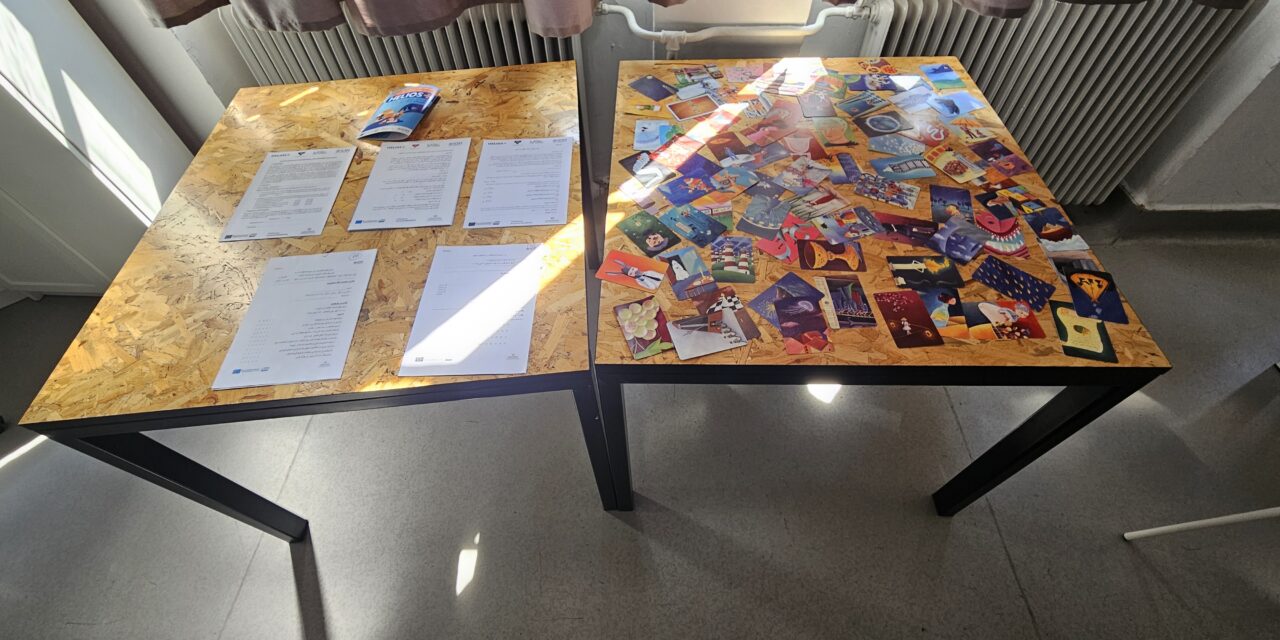
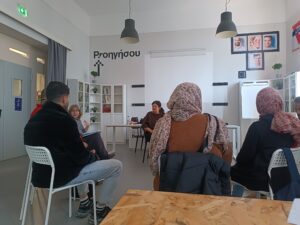
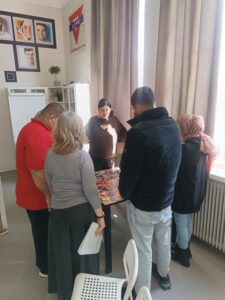
Within the framework of the HELIOS+ project, an additional focus group discussion was conducted with programme beneficiaries, aiming to highlight their everyday experiences and their interaction with the local community.
The focus group was coordinated by Ms. Dolores Tarrafeta (Social Cohesion Coordinator, HELIOS+ YMCA Centre), with the contribution of psychologist Ms. Aggela Mpoletsi (SolidarityNOW), who facilitated the discussion.
Through an open and participatory dialogue, participants shared experiences from their daily lives across different settings, including the workplace, public services, public transportation, and their neighbourhoods. Their contributions revealed a complex reality, where positive experiences of coexistence and integration coexist with significant challenges.
Particular emphasis was placed on the language barrier, which continues to significantly affect communication and access to services, as well as on housing, where difficulties were highlighted in relation to stereotypes and limited trust towards refugees. At the same time, incidents of discriminatory treatment were reported, mainly in public spaces, along with issues of labour insecurity and exploitation.
Despite these challenges, participants underlined that daily interaction with the local community gradually contributes to building relationships of trust, particularly in stable environments such as the workplace and neighbourhood.
An important finding that emerged from the process was that more sensitive experiences were not expressed immediately, but surfaced gradually as a sense of safety and trust was developed among participants. This highlights the importance of creating safe and supportive spaces for dialogue.
The findings of the discussion will be used to design more targeted interventions, aiming to strengthen social integration and more effectively address existing challenges.
The Helios+ Project is implemented in cooperation with IOM Greece and funded by ΕΣΠΑ through ΕΥΣΥΔ – ΜΕΥ of Ministry of Migration and Asylum (Υπουργείο Μετανάστευσης & Ασύλου) and with the co-financing of the European Union.


Recent Comments