
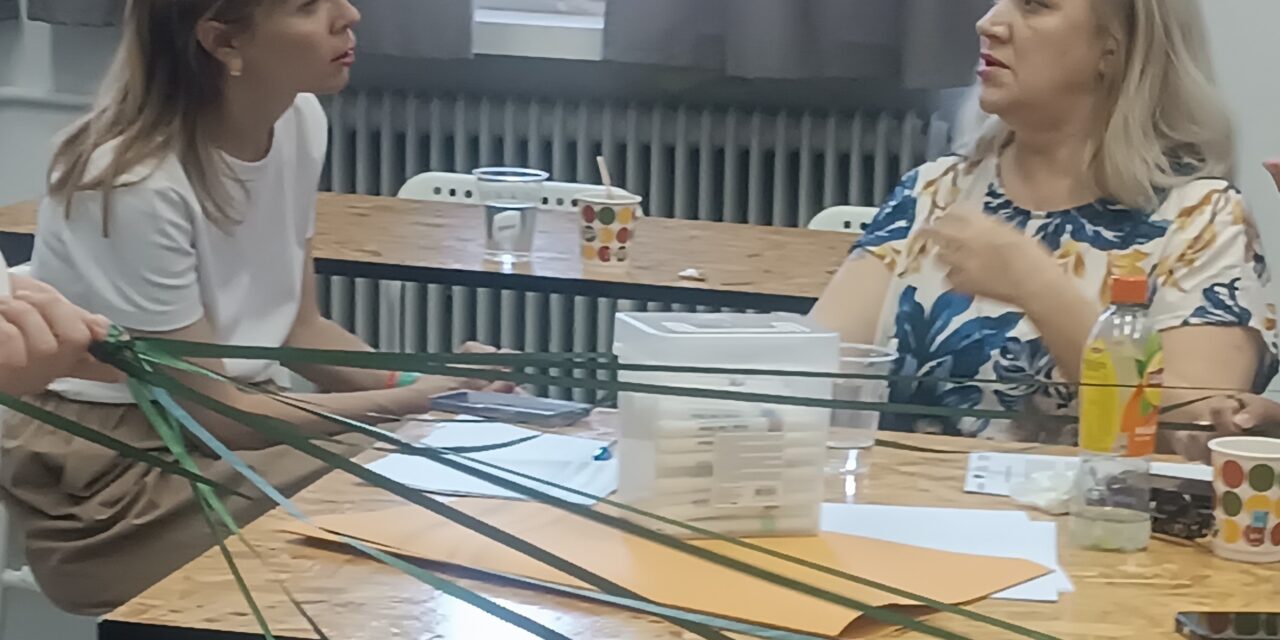

As part of the HELIOS+ Project, YMCA Thessaloniki organized on Friday, May 29th, two Focus Group Discussions exploring the experiences of young refugees and migrants aged 18-22 who are building their lives in Greece, as well as the perspectives of their parents, guardians, and support networks.
The first discussion brought together young adults from different backgrounds, including Ukrainian beneficiaries of temporary protection, Arab youth and a young Afghan participant who are in the process of transitioning to independent living. A second discussion was held with parents and caregivers from Ukraine, Syria, and Palestine, creating an opportunity to explore both generations’ experiences of adaptation and integration.
Participants shared the opportunities and challenges they encounter while navigating education, employment, independence, and family life in a new country. Young people spoke about feelings of uncertainty, loneliness, and pressure, but also about the personal growth, resilience, and new opportunities they have gained through their experiences in Greece. Parents highlighted the challenges of raising adolescents and young adults away from traditional support networks, while adapting to different cultural norms and expectations.
Despite their diverse backgrounds, both young people and parents expressed remarkably similar hopes for the future: stability, meaningful opportunities, social inclusion, and the chance to build a secure and fulfilling life.
The discussions also highlighted the importance of accessible support services, educational and employment opportunities, and community activities that foster connection, participation, and a sense of belonging.
Through initiatives such as these, YMCA Thessaloniki and the HELIOS+ Project continue to promote social cohesion by listening to the voices of refugees and migrants and supporting their active participation in community life.
The Helios+ Project is implemented in cooperation with IOM Greece and funded by ΕΣΠΑ through ΕΥΣΥΔ – ΜΕΥ of Ministry of Migration and Asylum (Υπουργείο Μετανάστευσης & Ασύλου) and with the co-financing of the European Union.


Recent Comments