
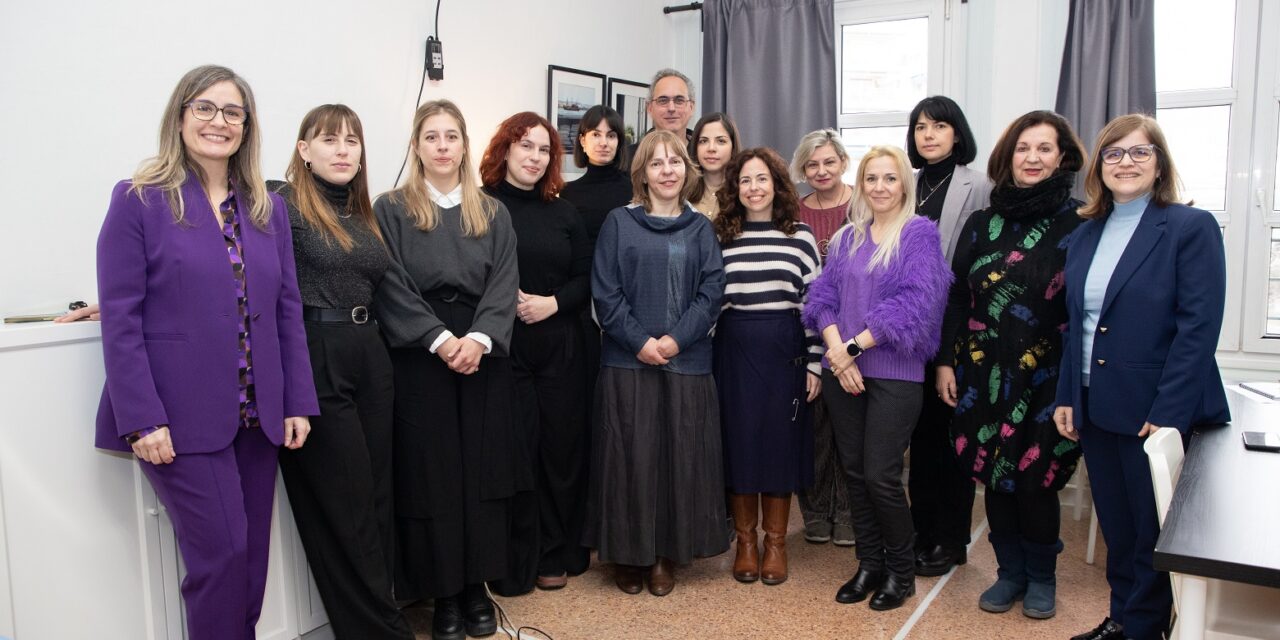

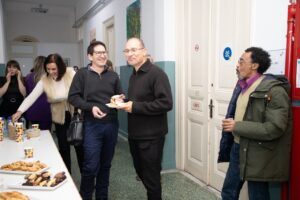
On Thursday, 22 January 2026, the HELIOS+ Centre of YMCA Thessaloniki organised an awareness-raising event entitled “Integration in Practice: Legal Framework, European Practices and Community Voices” at the central building of YMCA Thessaloniki, with the participation of 53 professionals and representatives of organisations from across the Region of Central Macedonia.
The event marked the first large-scale local stakeholder engagement action of the HELIOS+ Centre of YMCA Thessaloniki and aimed to strengthen knowledge, dialogue, and coordination around the integration of third-country nationals at local level.
The event opened with welcoming remarks by Aliki Mademli, Coordinator of the HELIOS+ Centre at YMCA Thessaloniki, who presented the objectives of the day and the overall framework of the action. Short introductory remarks followed by Aristi Tzoni, Director of the Action and Social Contribution Department of YMCA Thessaloniki; Theodora Leipsistinou, Municipal Councillor responsible for Equality, Social Solidarity and Inclusion; and Konstantinos Kousaxidis, National Action Officer of IOM. Finally, Alexia Tsipidou, HELIOS+ Regional Liaison Officer, provided a brief overview of the programme and its main pillars of intervention.
Multi-level participation and meaningful dialogue
Participants included representatives from:
-
local authorities and municipal services
-
police, health and education institutions
-
civil society organisations
-
public employment and social welfare services
-
the Church
-
as well as international organisations (IOM, UNHCR)
The diversity of participants contributed to a rich, cross-sectoral dialogue, highlighting different perspectives, institutional roles, and shared day-to-day challenges related to the integration of refugees and migrants.
Institutional framework and good practices in the European Union
The first thematic panel presented the institutional framework for integration in Greece, alongside good practices from European Union countries, with a particular focus on access to employment and targeted support. Presentations were delivered by Dora Kokozidou, Senior Durable Solutions Assistant at UNHCR, who outlined the legal framework for refugee integration in Greece, and Maria Kandylaki, Project Manager of the SkillsPath project at the International Rescue Committee, who highlighted good practices from EU countries, focusing on pathways into the labour market.
The discussion that followed underlined the need to strengthen inter-service coordination and confirmed the importance of continued support for beneficiaries even after their integration into the labour market. At the same time, networking among participants was reinforced through the exchange of contact details and the exploration of future collaborations.
Community voices at the centre
The second panel brought together representatives of refugee and migrant communities, who shared experiences and challenges from everyday life, highlighting practical issues that are often insufficiently reflected at institutional level. The panel included Elena Topaloglou, member of the Ukrainian–Greek Initiative, who shared the experiences of the Ukrainian community, and Bander Hashim, Secretary General and Communications Officer of the Greek–Arab Friendship Association, who spoke about the challenges and experiences of the Arab community regarding integration.
Particular emphasis was placed on:
-
difficulties in accessing education
-
administrative requirements
-
language barriers
Language learning was highlighted as one of the key priorities. Representatives of IOM informed participants about the launch of Greek language courses within the framework of the HELIOS+ programme, offered both in-person and online.
Workshop: from discussion to targeted action
The workshop that followed, facilitated by Dolores Tarrafeta, Social Cohesion Coordinator of the HELIOS+ Centre at YMCA Thessaloniki, brought together professionals from different sectors (education, health, security, employment, public services, and local authorities). Participants worked in mixed groups with the aim of identifying specific gaps in information and awareness.
Discussions, grounded in the professional experience of participants, led to the identification of:
-
common patterns of challenges
-
cross-sectoral needs
-
clear priorities for future, targeted awareness-raising actions at local level
Conclusions and next steps
The event was characterised by:
-
continuous and active attendance throughout the entire duration
-
active participation in all sessions and discussions
-
meaningful cross-sectoral and intercultural exchange of experiences and perspectives
-
activation and strengthening of a functional local network of stakeholders
The outcomes of the event will be directly utilised in the design of upcoming, thematically focused awareness-raising actions within the HELIOS+ framework, strengthening the transition from general information provision to planning based on real needs identified in the field.
The HELIOS+ Project of IOM Greece is co-funded by the European Social Fund+ (ESF+) under the Regional Programmes 2021–2027 and is fully aligned with the country’s National Integration Strategy.


Recent Comments